











Firth back at Te Mihi
Firth’s connection with geothermal power station construction began in 2007 with the supply of concrete to the Kawerau power station, commissioned in 2008. This was followed by work on the Nga Awa Purua power station at Rotokawa and Stage One of Te Mihi, built near the Wairākei Geothermal Power Station and commissioned in 2014.
Twelve years later, Firth is back at Te Mihi, supplying concrete for Stage Two - a new $712 million, 101-megawatt (MW) geothermal power station, part of a staged replacement of the 1950s-built Wairākei station.
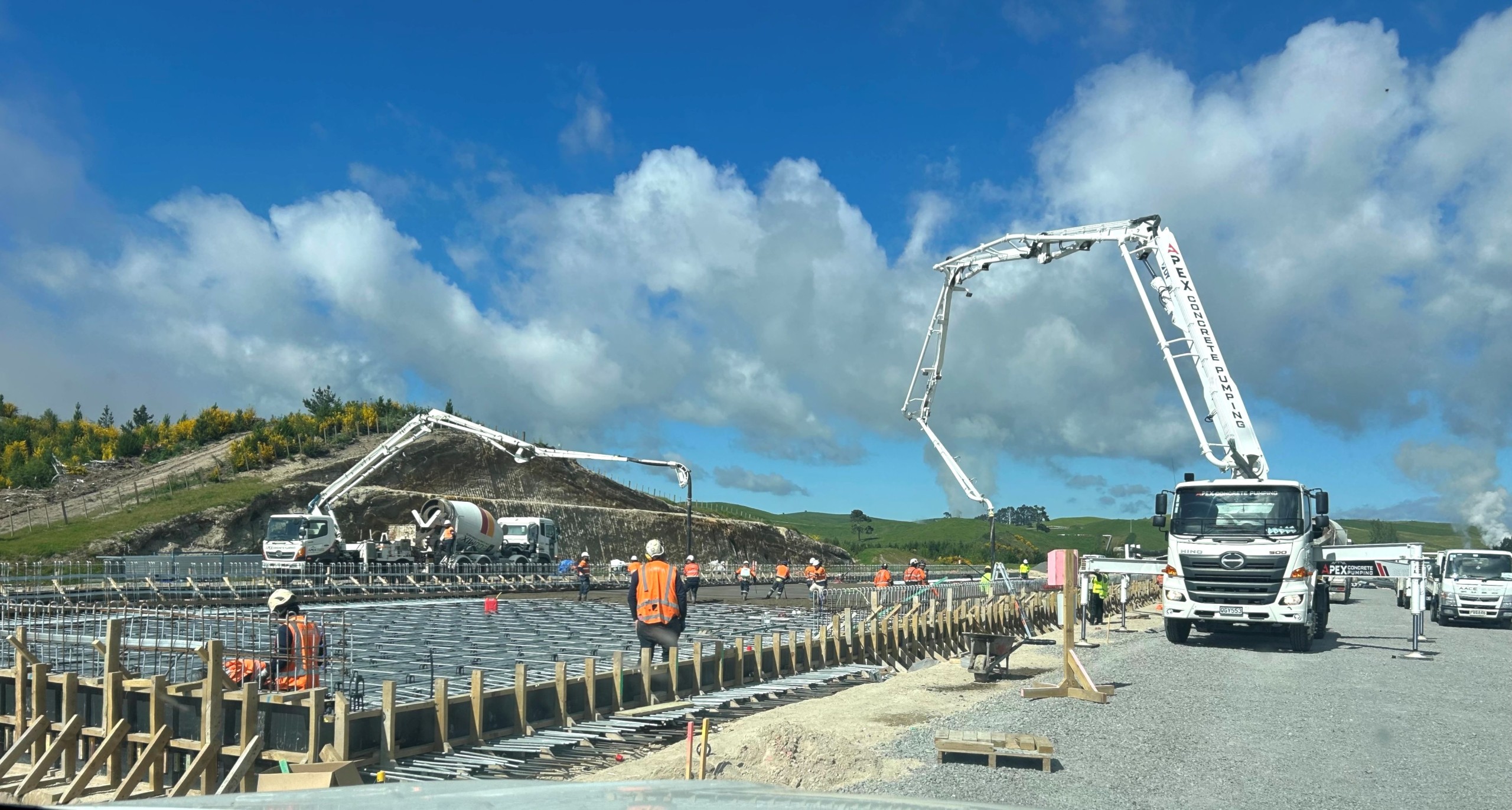
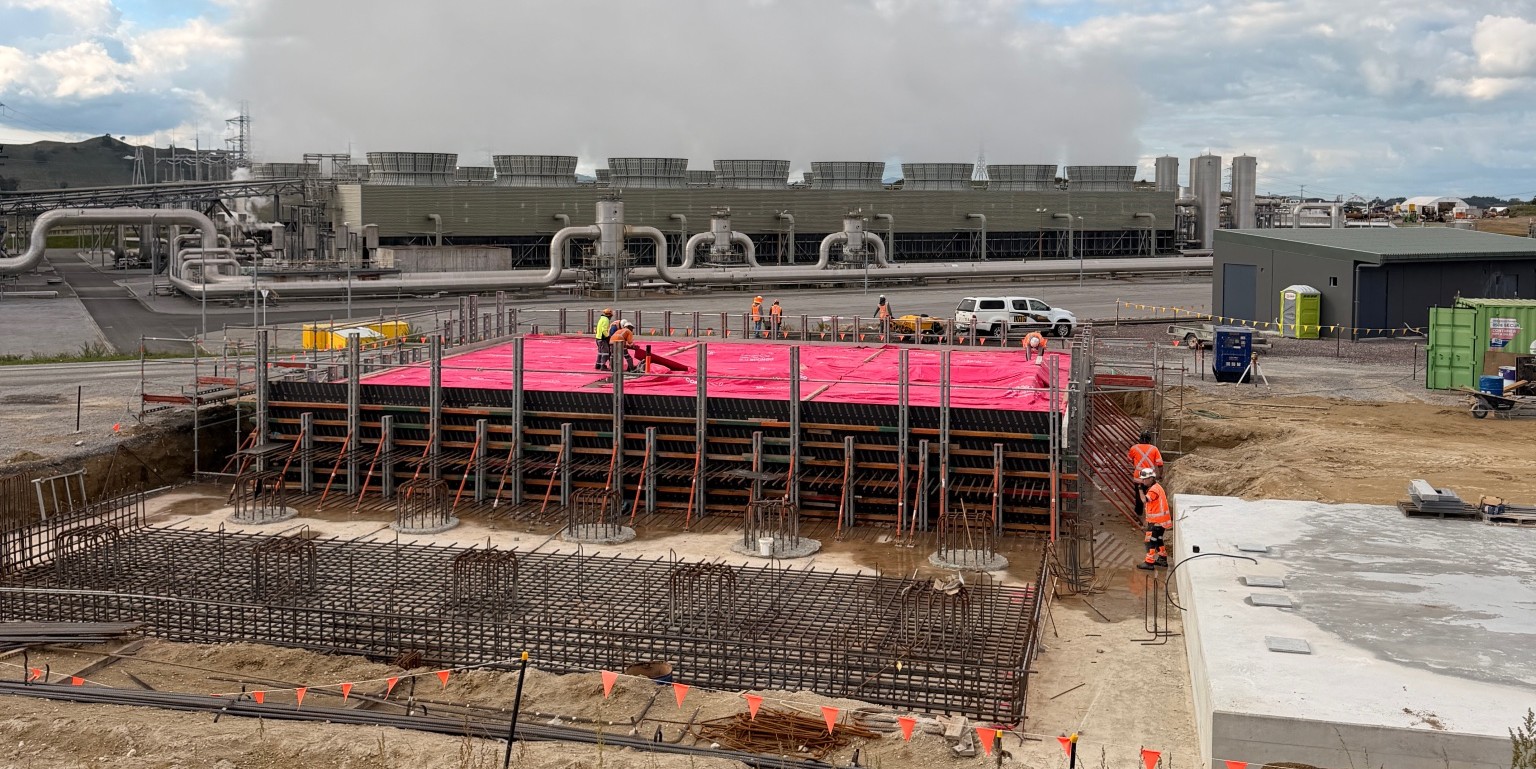
“We started supplying late last year and are now over halfway through Contact’s Te Mihi Stage Two project, having supplied more than 10,000m³ of concrete to date for United Civil and AB Contractors,” says Donald Riddle, Head of Lower North Island for Firth.
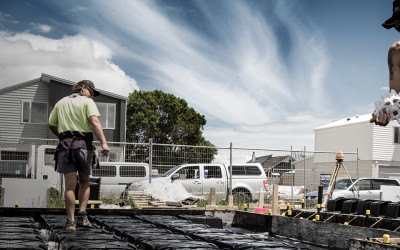
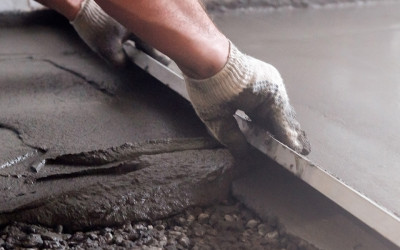
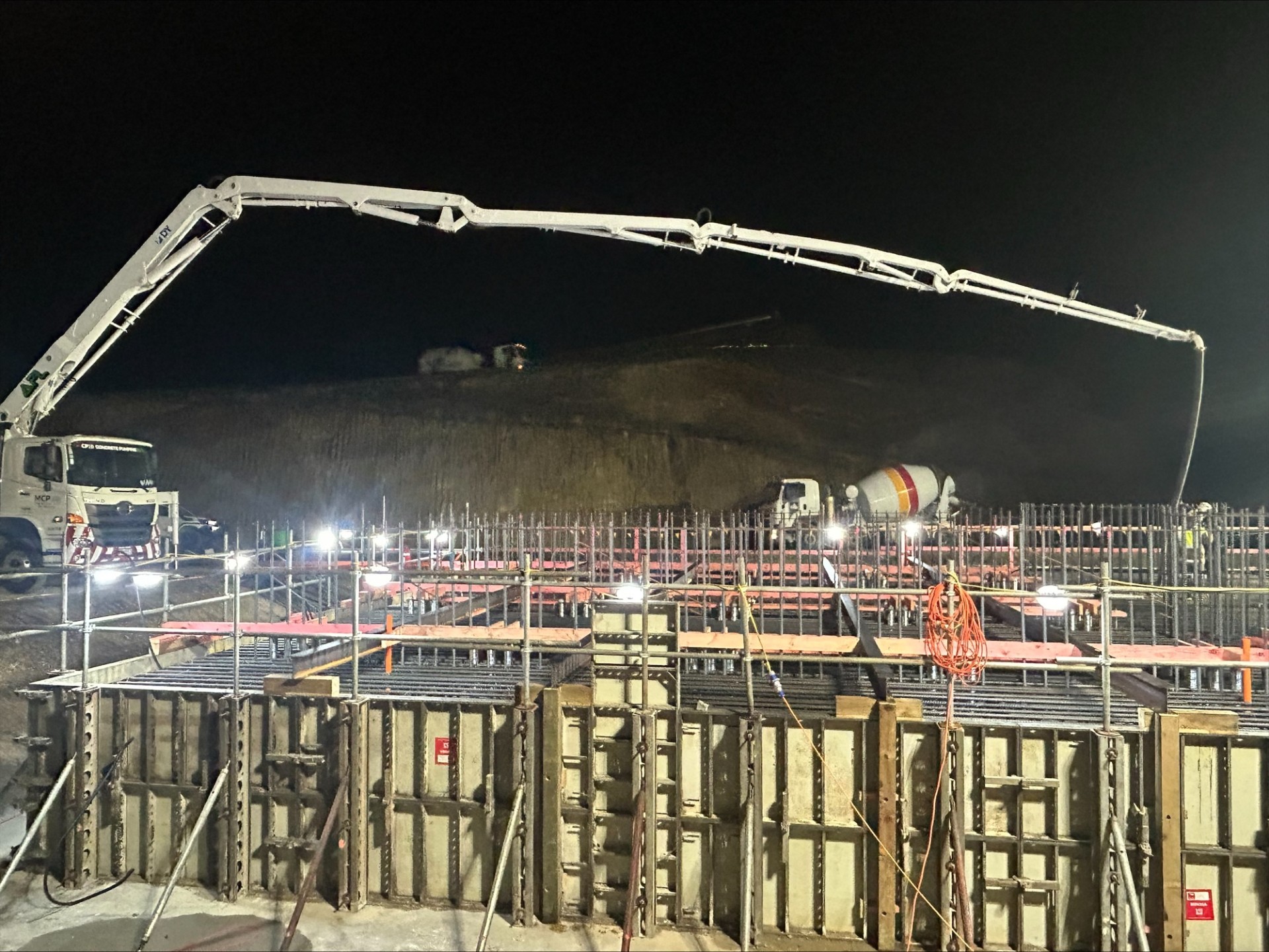
“Working with several contractors has required careful coordination by our team, particularly Rob Waru, Plant Manager (Tokoroa and Taupō). Rob and the team have done a great job staying on top of supply. They recently completed several large pours, including a 500m³ thermal pour with temperature monitoring, starting at 9pm and having most of it in the ground by 6am. There were no issues with supply, slumps were on point, and everything was delivered as planned.”
Ben Williams, Construction Manager for AB Contractors, says, “We have been involved in the construction of four power stations over the past four to five years and know Firth very well, having used their concrete for many years.”
“We are very experienced when it comes to power station construction and were engaged to work on Stage Two of Te Mihi. Working with Firth has gone very well. We have found Rob Waru, Firth’s Plant Manager at Taupō, to be fantastic. He goes above and beyond, opening the plant on Saturdays when necessary. He has put in some huge hours to get us the concrete we need. We can’t speak highly enough of him and his team. They do a great job for us.”
“The Te Mihi project represents a significant proportion of Taupō’s volume over the last six months, and it has also been a complex engineering project with significant low-carbon and other performance criteria,” says Cameron Lee, General Manager for Firth.
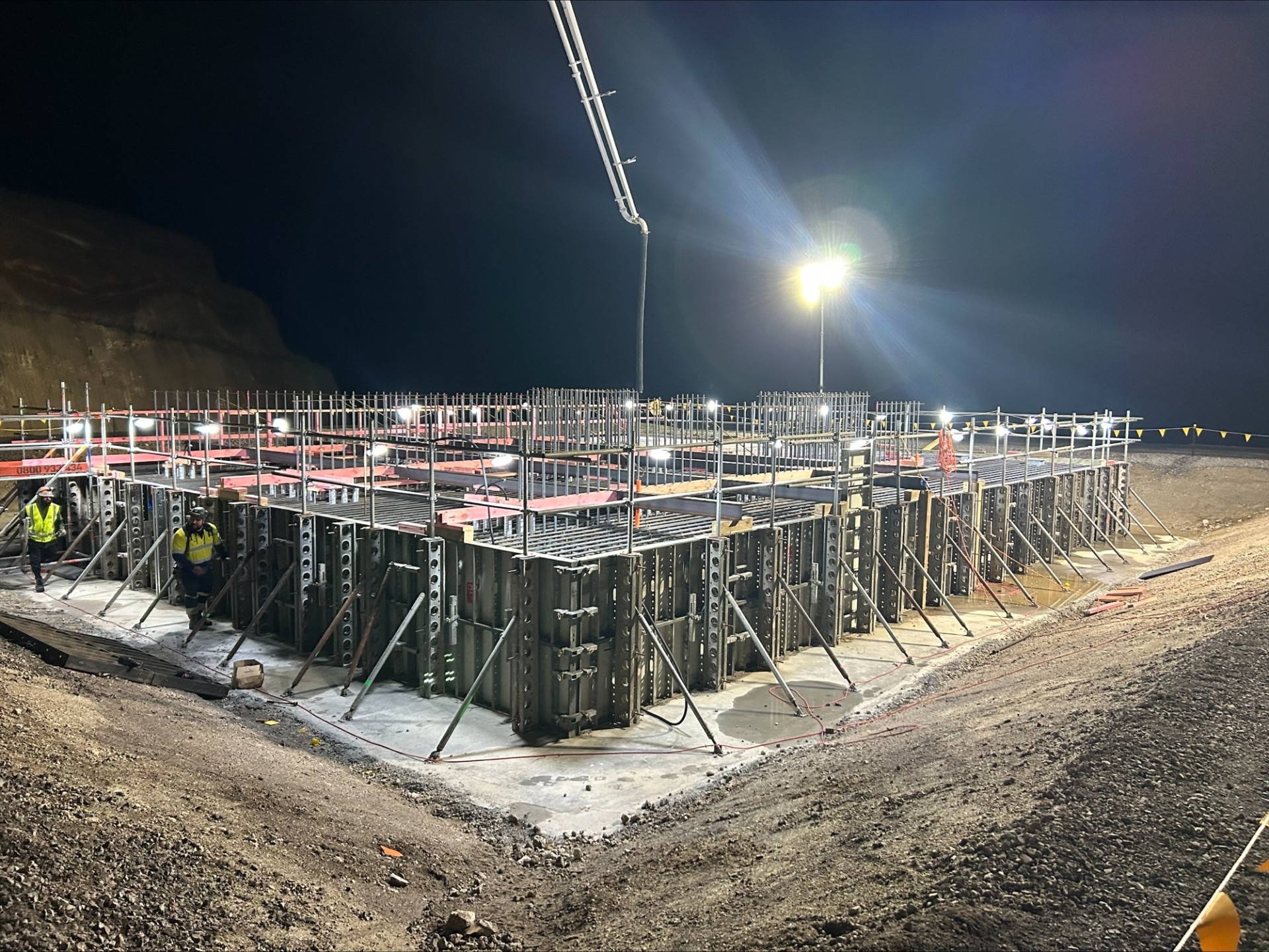
“We’ve completed three major continuous pours at Te Mihi in the 500–550m³ range, with the latest being 1.8m thick,” says Simon Odendaal, Regional Materials Manager (Central North Island/Waikato) for Firth.
The thickness of these pours can create heat-related challenges, which Firth mitigates through the use of a high fly ash content in the mix - 35% in this case.
“We monitor the temperature of the slab carefully throughout the curing process using temperature probes positioned at various points within the foundation, from bottom to top. This monitoring records the peak temperatures achieved and is a requirement of the project engineers.”
“It’s great to see us back working at Te Mihi after so many years and to see the excellent work our teams are doing, particularly the Taupō team,” adds Cameron. “I remember installing a secondary aggregate bin at the plant almost 20 years ago so we could increase production capacity for an earlier stage of the project - and now we’re back again.”
A few facts:
- Contact Energy’s original Te Mihi power station opened in 2014.
- Stage Two timeline: With construction well underway, the plant is expected to be fully online in Q3 2027.
- Capacity: It will produce enough electricity to power the equivalent of 120,000 New Zealand homes.
- Te Mihi Stage 2 is expected to generate more power than the existing geothermal stations on the steamfield, through more efficient use of the resource.