













Lean mix (very low carbon) Concrete for Hawkes Bay Expressway
Over the past two decades, concrete mix design has evolved from a largely trial-and-error process into a highly engineered, data-driven discipline focused on both performance and sustainability. A key driver of this transformation has been the industry's commitment to reducing the substantial carbon footprint associated with cement production.
In New Zealand, companies such as Firth have been at the forefront of developing lower-carbon concrete solutions, drawing on the expertise of their experienced engineering teams. This innovation was put to the test on the Hawke’s Bay Expressway (HBX) project, where a bespoke low-carbon concrete solution was required to meet demanding performance requirements while supporting the project's sustainability objectives.
| SH2 HBX is a critical two-lane lifeline route that connects communities across the region, providing access to key infrastructure including Hawke’s Bay Regional Hospital and Hawke’s Bay Airport. The much needed upgrade of the expressway forms part of the Government’s Roads of National Significance programme and has been identified as a priority project due to the region’s growing population and economy. |
Background
“The HBX is a really technically interesting project,” says Tim Bulmer, Regional Materials Manager (Bay of Plenty) for Firth. “Global engineering professionals WSP New Zealand worked alongside NZ Transport Agency to come up with a paving system that would work with their desire to adopt low-carbon concrete roads where feasible.”
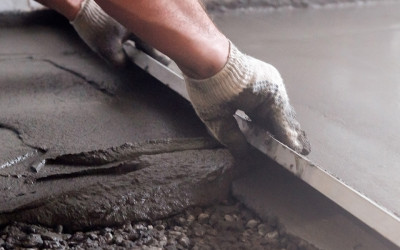
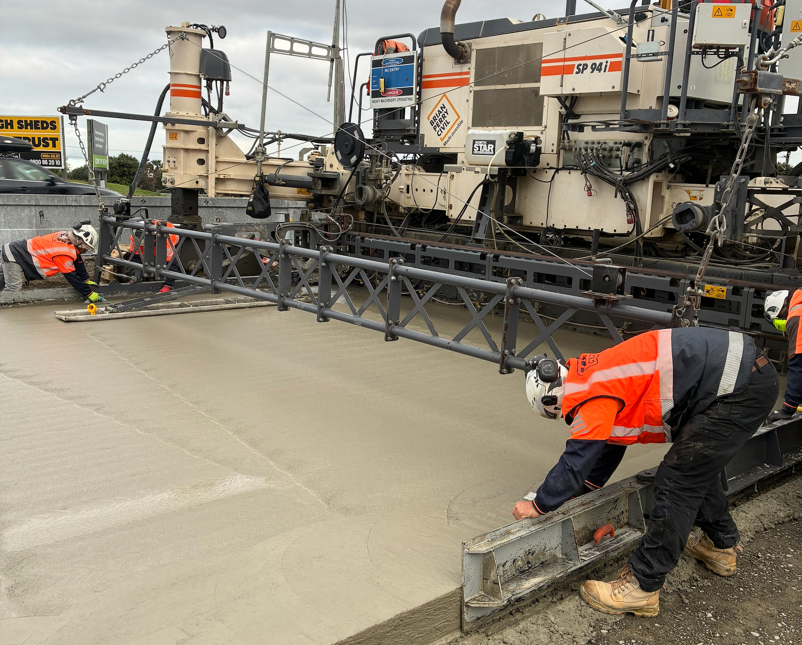
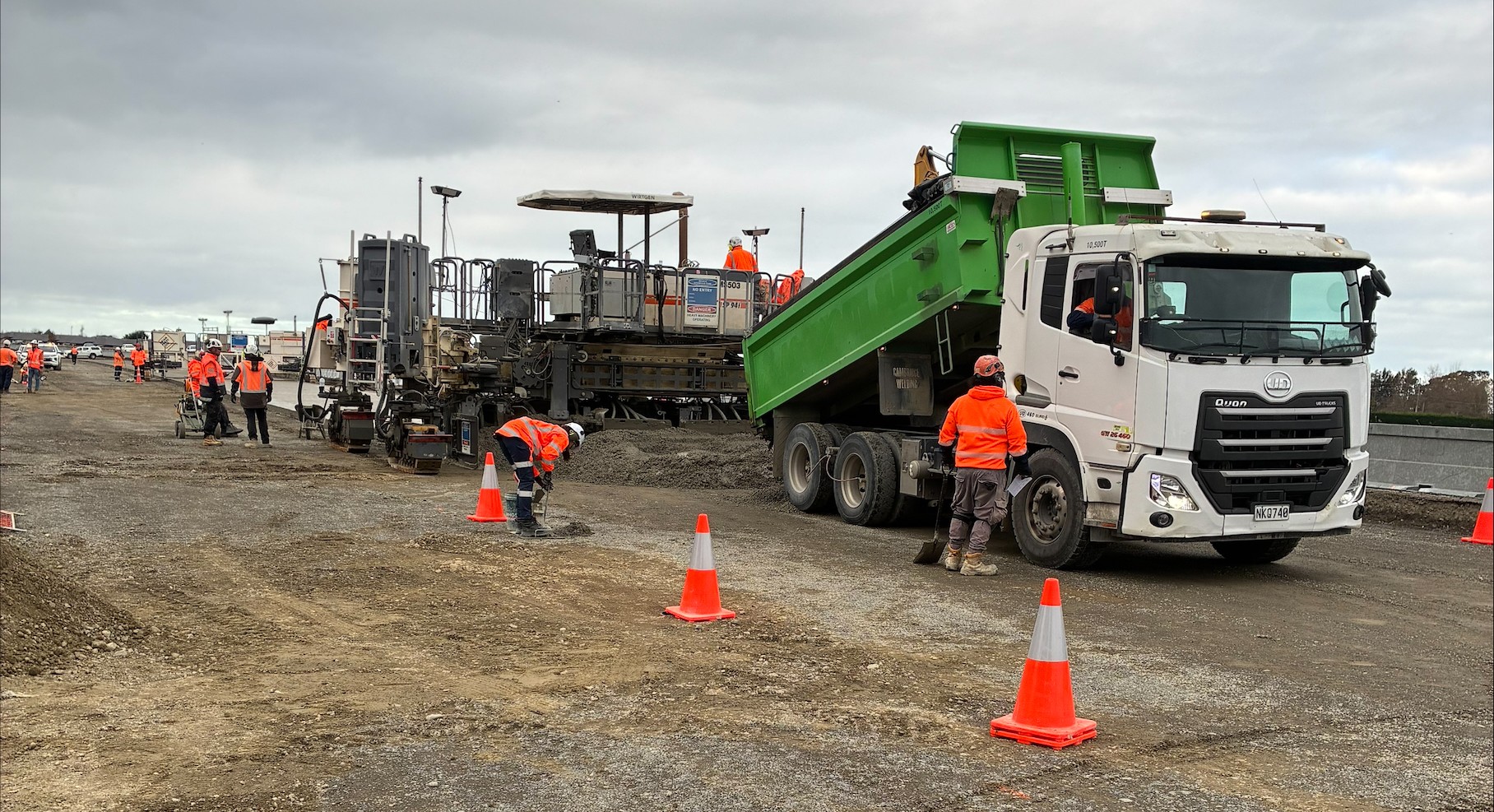
Tim says that when they were asked to produce a ‘lean’ concrete mix - with input from Brian Perry Civil, the civil contractor responsible for laying more than 10,000m³ of specialised concrete using its ‘paving train’ machinery - it was an exciting challenge they eagerly accepted.
“We have produced lean mixes at various times before, but never at this scale. This project required us to develop a robust, consistent mix that could be produced efficiently while meeting the demanding performance requirements of a major transport corridor.”
Due to the low strength requirements with the conflicting high paste requirements to allow for concrete extrusion, Tim says they had to look at options for binder additions that would maintain the low strength, while also giving suitable body to the concrete.
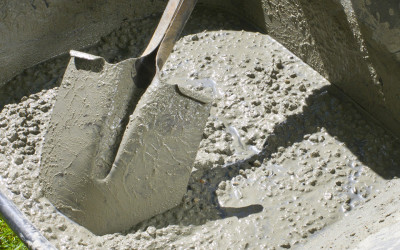
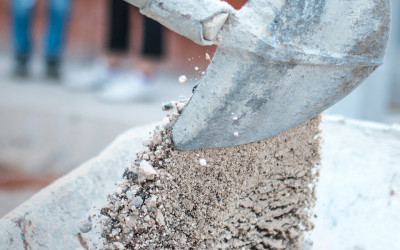
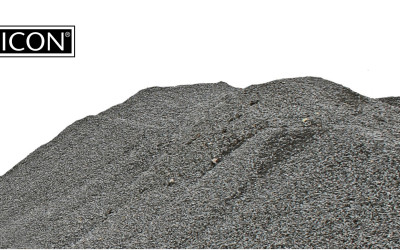
“We trialled and utilised a fine limestone powder, which replaces cement at an astonishing level and provides little to no extra compressive strength. This is a locally sourced material, which has meant the carbon content of this concrete is extremely low, while also keeping the mix cost down.”
Making and delivering LMC
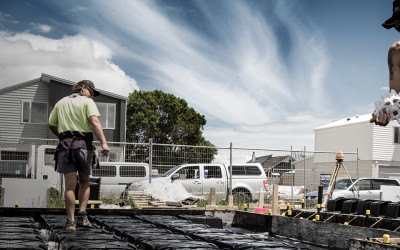
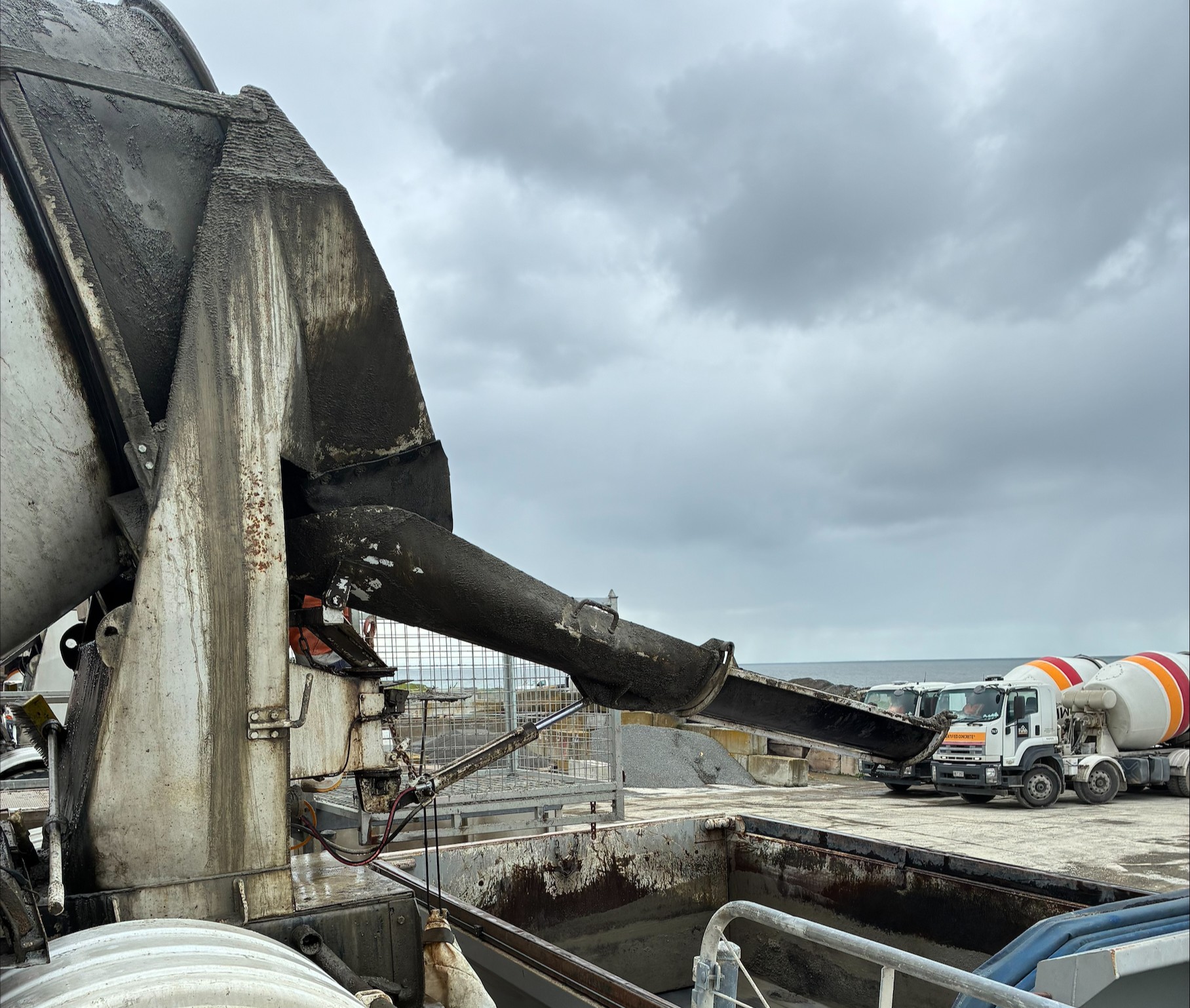
“The way we are utilising our batching plant at Awatoto for this project is unorthodox but effective” explains Tim. “Usually you would use a twin shaft paddle mixer which is really effective at combining damp materials. A readymix truck isn’t as effective at mixing, but we have developed a mix that sufficiently mixes in a readymix truck and is then able to be discharged at a good speed into waiting tipper trucks - which then deliver the mix to BPC’s paving train.”
“Firth’s Awatoto batching plant was the ideal place to produce LMC due to a large ramp which allowed us to get the height to tip from the readymix truck into a tipper truck. This means a much better utilisation of resources and has made the process much easier onsite.”
“With approximately 3000 m3 of the expected 10,000 m3 of LMC required things are going well with the project,” says Dylan Kawana-Waugh, Area Operations & Sales Manager-Hawkes Bay & Gisborne for Firth. “We’re delivering around 300 m3 per day from our little Awatoto plant which is solely dedicated to this project as it can only produce around 35 m3 an hour. So with five readymix trucks and eight tippers servicing BPC - it’s a busy well-functioning operation.”
The project is expected to be completed late 2029.
| Firth's Lean Mix Concrete (LMC) solution benefits: |
|
HBX Project Scope:
- Widening the 6.5km stretch between Taradale Road and Links Road/Pākōwhai Road to 4 lanes, including:
- Construction of new overpasses at Kennedy Road and Meeanee Road intersections
- A second bridge over the Tutaekuri River
- A new grade-separated interchange at the Links Road/Pākōwhai Road intersection
- Approximately 1km of 4-laning south of Links Road/Pākōwhai Road.
Key project benefits and outcomes:
- Road users will benefit from 11.7 km of free-flowing, uninterrupted travel, before arriving at a roundabout
- Travel time savings – for example, initially the average southbound morning peak trip from Napier to Hastings is expected to reduce by 5 minutes
- Travel time reliability: the worst-case journey time between Napier and Hastings is expected to drop by 8 minutes initially, so trips will be more predictable
- Increased resilience through new structures built to modern standards
- By 2048, we expect around 5-7 less deaths and serious injuries caused by crashes on the road
- High productivity and economic gains over and above direct transport impacts.